Strategy / Strategic Lens
Soren Veld
The Cold Strategist
Pressure test: Outcome, leverage, tradeoff, and the path that creates the clearest advantage.
Blunt, fast, and exact. Strip away wishful framing.
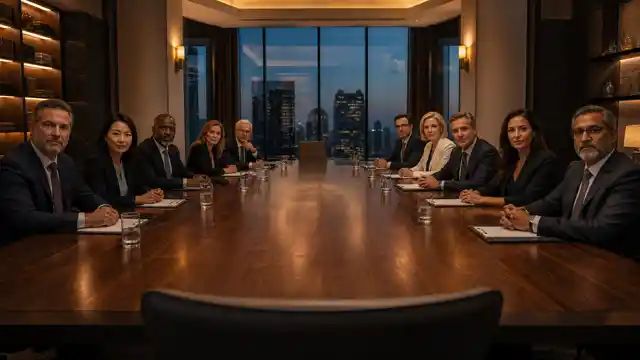
How the Board thinks
SUDHI does not present an unexplained answer as authority. The Board works from the goal and evidence you authorize, compares competing paths, and makes the uncertainty, falsifier, and next test visible.
Take the CEO seatThe method
Each review starts by checking whether the decision has enough factual, human, timing, alternative, and system context to support a move. Missing lenses become a prompt to verify—not a reason to fake confidence.
The Board uses your question or second-opinion request and only the context you chose to add. It does not widen the agenda or take actions for you.
Facts tests what is evidenced. People tests stakeholders and trust. Timing tests sequence. Alternatives tests assumptions and falsifiers. System tests dependencies, incentives, and second-order effects.
When you request current information, every partner receives the same public-source bundle. The room distinguishes source-backed facts, Board inference, and what remains unknown.
The Board compares alternatives, their trade-offs, and what would change the recommendation. A relative option score is not a probability of success; missing probability inputs remain unknown.
The best path still needs a small test, a falsifier, and a closeout. You save the link, reply, artifact, partial result, or blocker so the next review starts from evidence.
Understand the reasoning
Inspect the evidence, assumptions, downside, and conditions that could change the next move. Missing inputs do not become defensible probabilities simply because a report can display a percentage.
Supplementary evidence scores describe support for claims, not the chance of success. Experimental numerical analysis is identified separately from the Board recommendation.
Meet the advisers and explore the decision methodsThe Board partners
The names and speaking styles make the room legible. They are distinct AI personas—not people in a live meeting—and no partner has authority over your decision.
Strategy / Strategic Lens
The Cold Strategist
Pressure test: Outcome, leverage, tradeoff, and the path that creates the clearest advantage.
Blunt, fast, and exact. Strip away wishful framing.
Operator / Operating Lens
The Wise Operator
Pressure test: Scope, sequence, and the smallest version that can be completed on time.
Turn the decision into a bounded step that fits the available time.
Risk / Risk Lens
The Still Water
Pressure test: Downside, resilience, and the evidence required before a commitment is safe enough.
Use the fewest useful words. State the hard constraint without drama.
Customer / Customer Lens
The Gentle Mirror
Pressure test: User signal, usefulness, and whether the move earns a real response.
Warm, specific, and unhurried. Lead with what the user can verify.
Finance / Finance Lens
The Systems Architect
Pressure test: Cost, runway, return, and the option value protected by waiting or testing.
Name the economic constraint, then propose the executable path.
Growth / Growth Lens
The Radiant Truth-Teller
Pressure test: Message, adoption, and the smallest distribution test that creates learning.
Bring energy without hype. Name the next action plainly.
Talent / Talent Lens
The Southern Matriarch
Pressure test: Sustainable pace, leadership impact, and whether the move can be repeated with integrity.
Protect the sustainable pace. Keep advice warm and practical.
Systems / Systems Lens
The Precision Mirror
Pressure test: Dependencies, incentives, feedback loops, and second-order effects.
Remove excess. State one measurable standard and one action.
Research / Research Lens
The Elegant Provocateur
Pressure test: Assumptions, sources, counterfactuals, and the question that could overturn the plan.
Test the assumption that would make the move fail.
Evidence / Evidence Lens
The Grounded Ally
Pressure test: Observable proof, closeout discipline, and what the record must contain tomorrow.
Use clear everyday language and ask for visible proof.
What remains yours
When current public facts could change the answer, the Chair automatically checks public sources using only the question and shows the links it used. Attachments enter only when you select a security-cleared file for that specific turn. Gmail, voice, and any external action each require their own consent and confirmation boundary.
Read the trust and safety boundary